
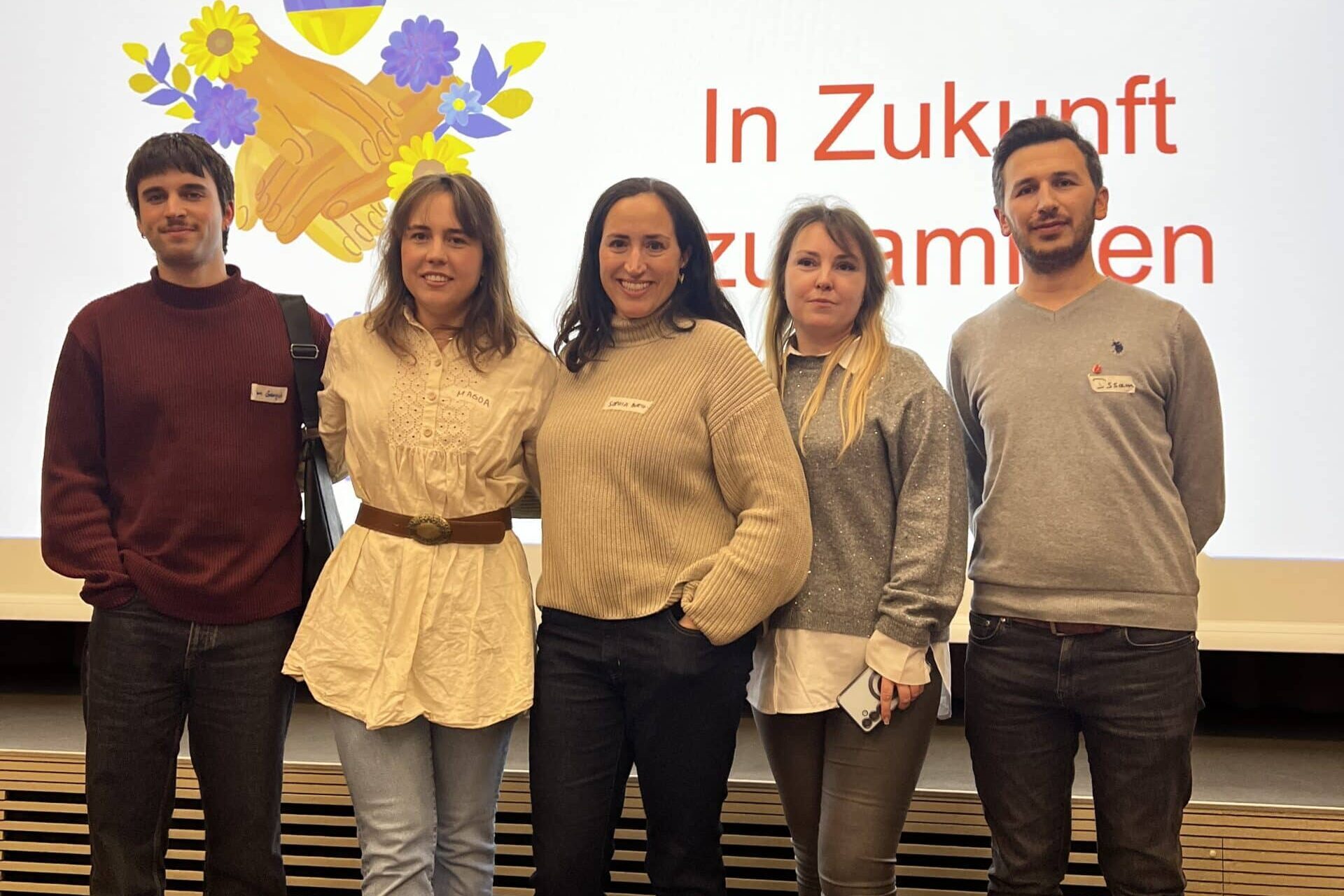
Ukrainian refugees, local administrators, a folk choir, civil society organizations — these words perfectly describe the mix of actors who came together last Friday at a solution-oriented dialogue space in the Dahme-Spreewald district, organized by the In Zukunft Zusammen (“In the future together”) project.
The event by Future Challenges gathered participants ranging from members of the Ukrainian community to representatives of local administration, NGOs, and other local actors. The aim was to exchange experiences, identify shared challenges, and work towards practical solutions to improve integration processes at the local level.

Migration Matters was there to contribute an interactive input on fostering dialogue and shifting perceptions around migration. We started with an icebreaker, opening up a conversation about Germany as a country of immigration. This exchange brought forward unexpected insights — from reflections on migrant identity within diverse communities to questions of integration, belonging, and return.
We also shared information from over a decade of our work with diverse groups — from students and young people to teachers and journalists — and how we are currently developing this approach further in the context of local administration across Germany.


Throughout the event, participants engaged in discussions that focused not only on improving existing structures — such as communication with authorities or access to services — but also on rethinking how these systems can better respond to people’s needs. At the same time, the event created space for connection: for networking, mutual support, and building long-term cooperation across different sectors.
At the end of the event, Future Challenges presented the research component of In Zukunft Zusammen. Through a series of small focus groups, the project has brought together perspectives from both Ukrainian refugees and administrative actors, creating a more nuanced understanding of challenges and opportunities within local integration processes. Over half of the Ukrainian respondents for instance reported usually feeling emotional stress or anxiety prior to appointments with local administrators. On the other hand, 90% of local administrators reported feeling highly stressed due to the large amount of cases they handle.
The team at Migration Matters looks forward to building on this important work. Drawing on the insights and experiences gathered through the partnership with In Zukunft Zusammen, we will continue exploring these questions through our project Rethinking Participation, in collaboration with DeZIM Institute and supported by EPIM, a collaborative initiative of the Network of European Foundations (NEF). The project focuses on centering the lived experiences of refugees and forced migrants in shaping local integration policies in Germany.
If you’re interested in having Migration Matters be part of your upcoming workshop or event, reach out to us through our Contact Page