

By Bernadette Klausberger
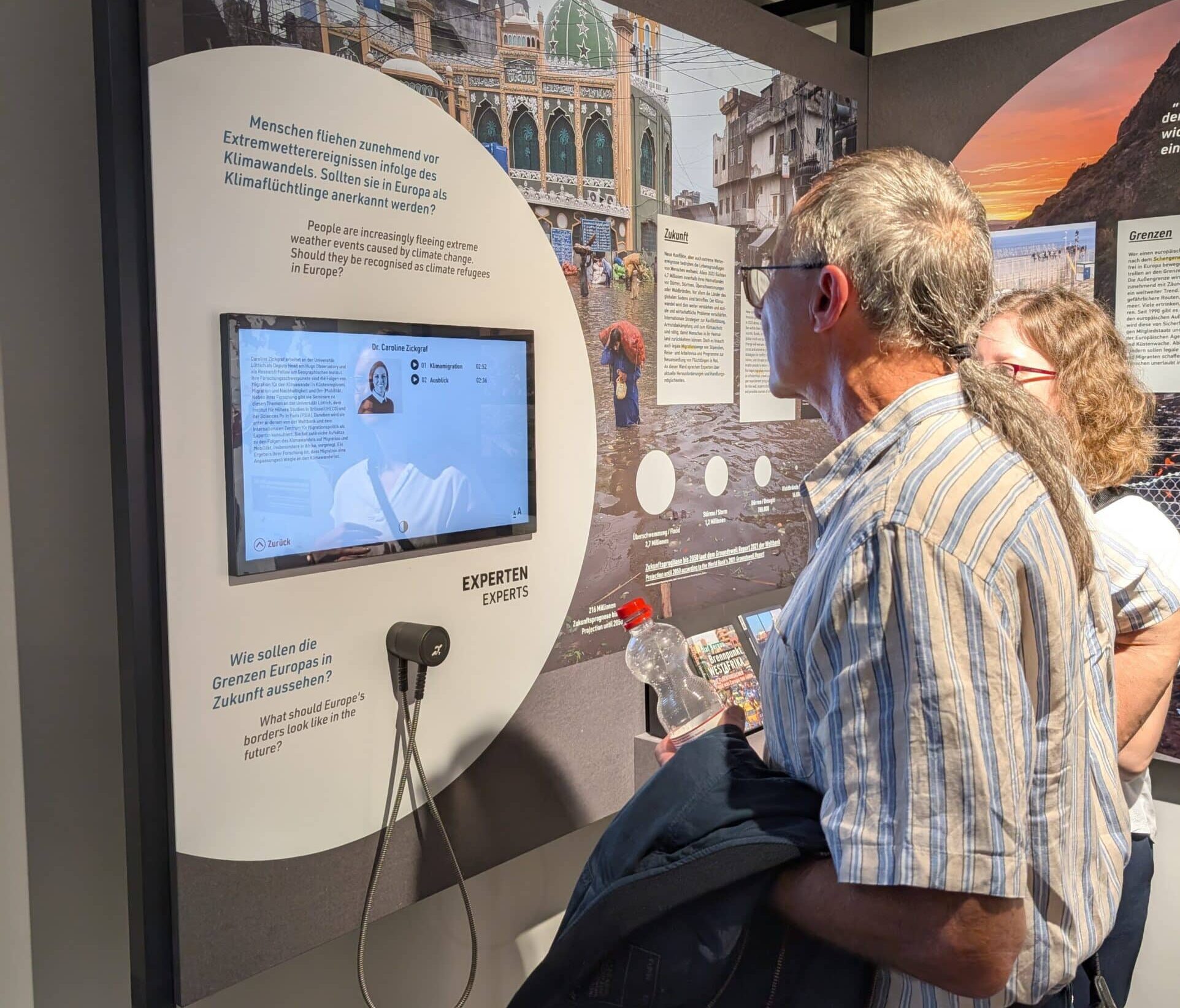
What can people in Germany learn from communities in Senegal about climate-induced migration? How can cities respond to climate-driven mobility? – Two of the videos produced by Migration Matters as part of our series on climate change and migration are now included in the permanent exhibition at the newly opened Learning and Remembrance Site in the former emergency reception center in Gießen, Germany.
Exhibitions like the new permanent exhibition in Gießen do more than show migration stories of the past – they connect them with the issues that concern us today.
As global crises evolve, so too does the group of people who are forced to flee or seek protection.
In the German state of Hesse, a unique site commemorates the diversity of migration movements: the former Federal Emergency Reception Centre in Gießen is the oldest and, until its closure in 2018, the only reception facility in Germany that had been operating continuously since the end of World War II:
In 1946, the first facilities were created to receive people relocating from the Soviet Occupation Zone (SBZ). Shortly thereafter, the barracks became the only and central transit camp of the US Occupation Zone.
From 1963 to 1989, the centre in Gießen served as the main federal reception facility for all refugees and people relocating from the GDR.
In the new permanent exhibition at the Learning and Remembrance Site Emergency Reception Center Gießen (opened summer 2025), visitors will encounter a wide range of motivations and life stories shaped by displacement and migration.

Fotos © Lern- und Erinnerungsort Gießen
In the section on the future, the exhibition features current academic contributions to debates on displacement and migration. Climate change is one of many reasons why people leave their homes and adapt through migration.
The interview conducted by Migration Matters with Dr. Caroline Zickgraf from the Hugo Observatory at the University of Liège, part of the series “The Big Climate Movement: Migration and Displacement in Times of Climate Change”, provides insights into present and future challenges arising from the interconnections between climate change and migration. It also highlights solutions, showing how people in cities and rural regions are adapting to climate impacts and what role forward-looking decision-making—by both individuals and policymakers —can play.
The full video series, featuring contributions from Dr. Caroline Zickgraf, Dr. François Gemenne, and Dr. Yvonne Su, is available as open educational material on the Migration Matters YouTube channel.
Migration Matters’ educational work in Germany is supported by the Deutsche Postcode Lotterie. #PostcodeEffekt #PostcodeEffekt